
Are Solar Panels Worth It in Milford, MA?
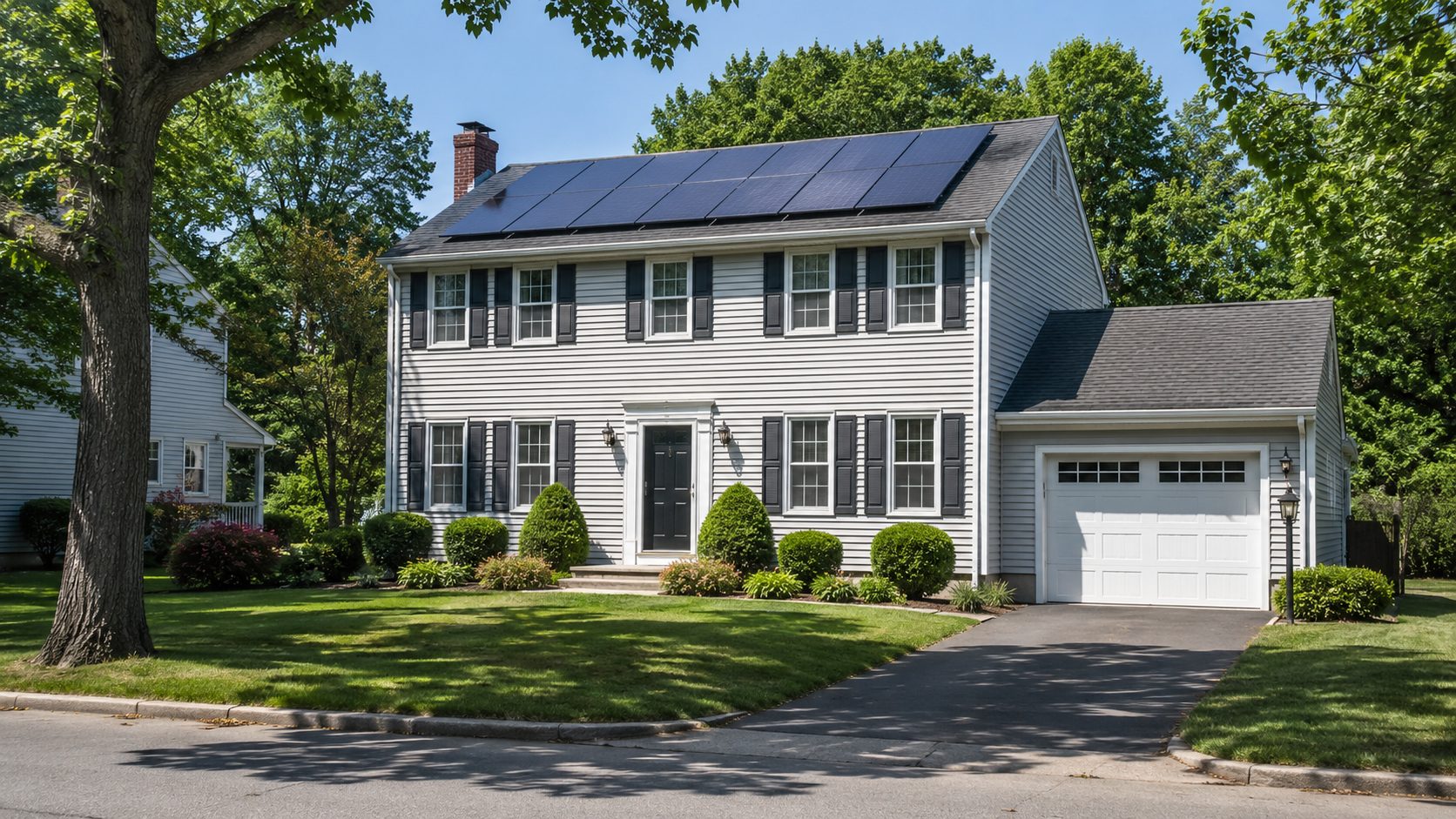
Solar panels can be worth it in Milford, MA for homeowners with meaningful electricity usage, good roof exposure, limited shade, and plans to stay in the home long enough to benefit from the system. The answer depends on the home itself, including the roof, National Grid usage, system design, and long-term energy goals.
Key takeaways
Solar can be worth it in Milford when the home has strong electricity usage and enough usable roof space.
Roof direction, shade, roof condition, and annual electricity use all affect the value of solar.
Milford homeowners served by National Grid may be eligible for Massachusetts net metering when their systems meet current requirements.
Massachusetts programs may improve the long-term value of a qualifying solar system, but incentives should not be the only reason to go solar.
A personalized review is more useful than a townwide average because every home is different.
Are solar panels worth it in Milford, MA?
Yes, solar panels can be worth it in Milford, MA when the home has the right combination of electricity usage, sun exposure, roof space, and long-term ownership plans. Homes that use more electricity often have a larger opportunity to reduce the amount of power purchased from the grid.
That does not mean solar is right for every property.
Two homes on the same Milford street can have very different results. One may have an open roof with strong sunlight, while the other may be surrounded by mature trees. One household may use large amounts of electricity for air conditioning, a pool, an electric vehicle, or heat pumps, while another uses much less.
The best answer comes from reviewing the actual home and electric bill.
What makes a Milford home a good fit for solar?
A Milford home may be a strong fit for solar when it has enough usable roof space, limited shade, good sun exposure, and a roof that is in solid condition. The home should also use enough electricity for solar production to create meaningful value.
South-facing roof sections are often favorable, but they are not required.
East-facing and west-facing roofs can also support productive solar systems. Roof pitch, surrounding trees, chimneys, dormers, and available space all affect the final design.
The goal is not to find a perfect roof. The goal is to determine whether the available roof space can support a system that makes sense for the homeowner.
How does electricity usage affect whether solar is worth it?
Electricity usage is one of the biggest factors in determining whether solar is worth it. A home that uses more electricity has more utility usage for solar to offset.
That is why the electric bill matters so much.
A review of your National Grid bill in Milford can show annual usage, monthly patterns, supply charges, delivery charges, and whether future energy needs should be included in the system design.
One expensive month does not tell the full story. A full year of electricity usage gives a much clearer picture.
Does Milford Community Electricity affect solar savings?
Milford Community Electricity can affect the supply portion of the electric bill, which may influence the value of electricity offset by solar. It does not replace National Grid as the electric delivery utility.
The supply rate is only one part of the overall solar calculation.
Electricity usage, delivery charges, system production, net metering, roof conditions, and future energy needs all matter. Homeowners comparing Milford Community Electricity and National Grid should understand that changing suppliers and producing electricity at home are two different strategies.
Solar can reduce how much electricity a home needs to purchase from the grid. The supply program determines how some of the remaining electricity is priced.
How does net metering affect solar in Milford, MA?
Net metering can help eligible Milford homeowners receive bill credits when a solar system sends excess electricity back to the grid. Those credits can help balance periods when the home uses more electricity than the solar system is producing.
Solar production changes throughout the day and throughout the year.
A system may produce more electricity during long summer days and less during shorter winter days. Net metering helps connect solar production with the household’s overall electricity use rather than evaluating each hour separately.
Eligibility and utility requirements still matter, so the system must be designed and approved correctly.
Do solar panels work well in Milford winters?
Yes, solar panels continue producing electricity during Milford winters. Solar systems use sunlight, not heat, so cold temperatures do not prevent the panels from operating.
Winter production is usually lower because the days are shorter and the sun sits lower in the sky.
Snow can temporarily reduce production when panels are covered, but annual production is the more important measurement. A properly designed system accounts for seasonal changes across the full year.
A cloudy January day should not be compared directly with a bright July day. The system is evaluated based on its expected annual output.
Does roof age affect whether solar is worth it?
Yes, roof age can affect whether solar is worth it. If the roof is near the end of its useful life, replacing it before installing solar may be the better long-term decision.
Solar panels are designed to remain on the home for many years.
Installing them on a roof that will need replacement soon can create additional work and expense later because the panels may need to be removed and reinstalled.
A solar evaluation should include a conversation about roof age and condition before the final system design is approved.
When might solar not be worth it in Milford?
Solar may not be worth it when the roof is heavily shaded, too small, in poor condition, or unable to support enough panels. It may also be a weaker fit for a household with very low electricity usage.
Short-term ownership plans can also affect the decision.
That does not mean there is anything wrong with the home. It simply means the project may not produce enough value to justify moving forward.
A trustworthy solar company should be willing to explain when the numbers do not work.
How does battery backup affect the value of solar?
Battery backup can add value for homeowners who care about outage protection or storing electricity for later use. Solar panels alone usually do not keep a standard grid-connected home powered during an outage.
A battery can support selected circuits when the grid goes down.
The amount of backup depends on battery size, household demand, and the appliances connected to the backup system. Some homeowners prioritize refrigeration, lighting, internet, sump pumps, heating controls, or medical equipment.
For households concerned about power outages in Milford, MA, battery storage may be part of the solar conversation from the beginning.
How should Milford homeowners evaluate a solar proposal?
Milford homeowners should review the system size, expected annual production, roof layout, electricity usage, equipment, warranties, financing terms, and utility assumptions.
Do not judge the proposal only by the monthly payment.
A smaller system may have a lower payment but offset less electricity. A proposal with unusually high production estimates may look better on paper but rely on assumptions that deserve a closer look.
The numbers should be easy to trace back to the home’s actual usage and roof conditions.
How do I choose a solar company in Milford, MA?
Choose a solar company that reviews the electric bill, evaluates the roof, explains the utility process, provides realistic production estimates, and answers questions without pressure.
Clear communication matters.
The company should explain why a particular system size was recommended and how the projected savings were calculated. Homeowners should also understand the equipment, warranties, project timeline, and what happens after installation.
Knowing the right questions to ask before hiring a solar company in Milford can make it easier to compare proposals and identify weak assumptions.
Your World Solutions helps Milford homeowners evaluate solar based on the actual home, electric usage, roof conditions, and long-term goals. Homeowners comparing the best solar company in Milford, MA should look for clear guidance, realistic numbers, and a recommendation built around the property rather than a generic sales pitch.
Frequently Asked Questions About Solar Panels in Milford, MA
Can solar panels increase the value of a Milford home?
Solar panels may add value to a home when the system is owned, performs well, and is attractive to future buyers. The effect depends on the system, ownership structure, home, and local real estate market.
Should I replace an old roof before installing solar?
Yes, replacing an aging roof before solar may be the better choice when the roof is approaching the end of its useful life. This can reduce the chance that panels will need to be removed and reinstalled for roof work later.
Will solar panels work if my roof faces east or west?
Yes, east-facing and west-facing roofs can support productive solar systems. Roof direction is only one factor, and shade, available space, pitch, and annual electricity use also matter.
Can I add solar now and a battery later?
Yes, a battery may be added later in many situations, but compatibility depends on the solar equipment and electrical design. Discussing future battery plans during the initial system design can make later upgrades easier.
How long does it take to know whether my Milford home is a good fit for solar?
An initial review can often begin with the electric bill, roof layout, and shade conditions. A more detailed design and site evaluation may be needed before confirming system size, production, and project details.