
Solar and Battery Backup in Milford, MA: What Homeowners Should Know
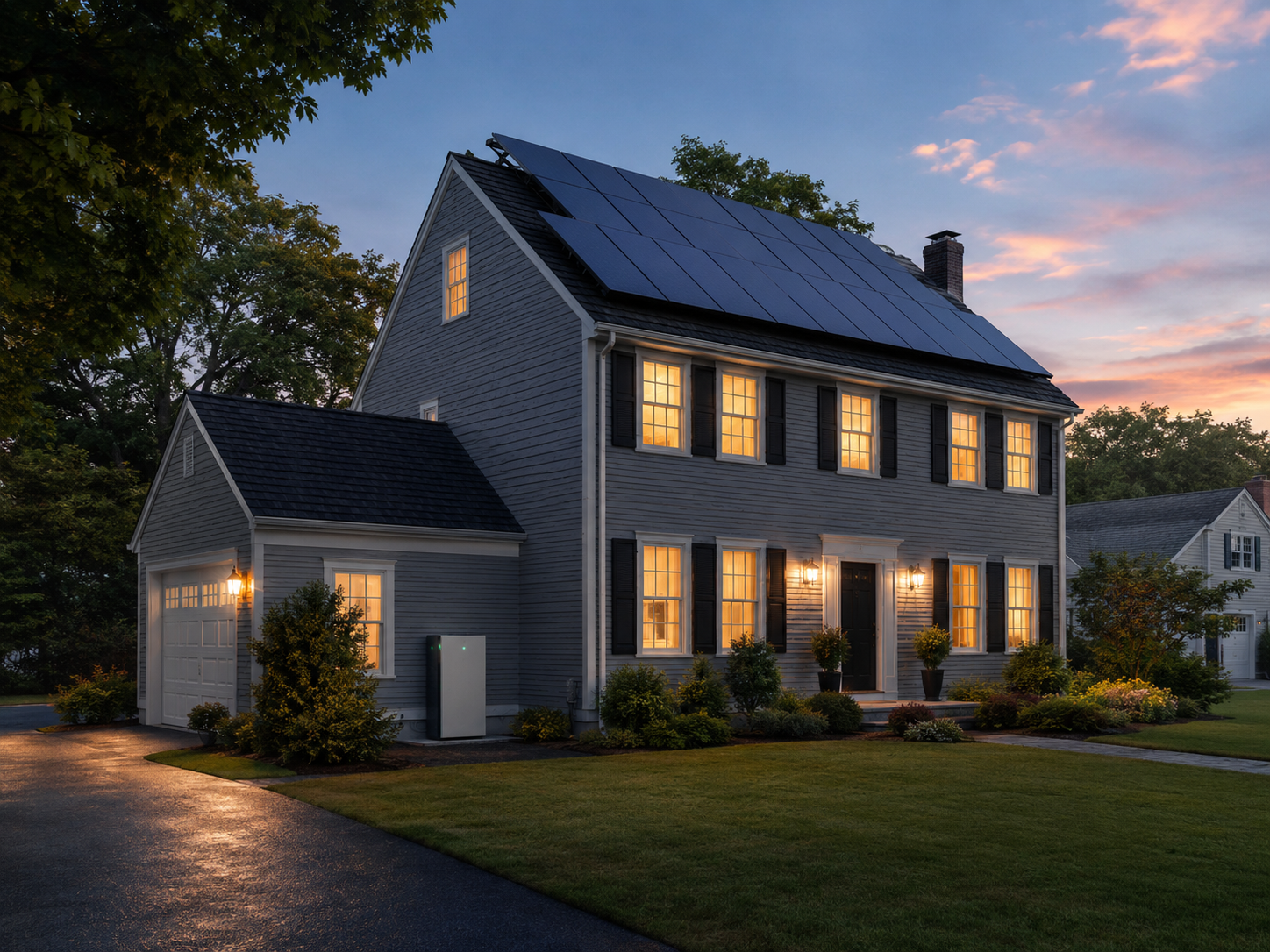
Solar and battery backup can help Milford, MA homeowners reduce their reliance on grid electricity while providing backup power during an outage. Solar panels alone usually do not keep a standard grid-connected home powered when the grid goes down, but a properly designed battery system can keep selected circuits or larger portions of the home running. The right setup depends on electricity usage, backup priorities, battery capacity, and the home’s electrical system.
Key takeaways
Solar panels alone usually shut down during a grid outage.
A home battery can keep selected circuits or larger portions of the home powered, depending on the system design.
Battery runtime depends on battery capacity and how much electricity the home uses during the outage.
Milford homeowners should decide which appliances and systems matter most before choosing a battery.
Solar and battery backup should be designed around the home’s actual electric usage, outage concerns, and long-term goals.
How do solar panels and battery backup work together?
Solar panels produce electricity from sunlight, while a battery stores electricity for later use. When the system is designed for backup power, stored energy can be used during a utility outage.
During normal conditions, solar energy may power the home, charge the battery, or send excess electricity to the grid. The exact flow depends on the system settings, battery charge level, household usage, and utility requirements.
During an outage, the battery separates the backed-up portion of the home from the grid and supplies electricity to the selected circuits. If the system supports solar charging during an outage, the panels may also help recharge the battery while sunlight is available.
Do solar panels keep the lights on during a power outage?
No, solar panels alone usually do not keep a standard grid-connected home powered during an outage. Most systems automatically shut down when the grid goes offline to protect utility workers and electrical equipment.
This surprises many homeowners.
Panels on the roof do not automatically mean the house has backup power.
Battery storage changes that. A properly designed solar and battery system can keep designated parts of the home powered without sending electricity back onto the utility grid.
Homeowners concerned about power outages in Milford, MA should bring up backup power early in the solar planning process.
What can a home battery power during an outage?
A home battery can power selected circuits or larger portions of a home depending on battery capacity, system design, and household demand. Common priorities include refrigerators, lights, internet equipment, outlets, sump pumps, heating controls, and certain medical devices.
The right backup plan is different for every household.
One family may only want to keep food cold and phones charged.
Another may need a well pump, sump pump, home office, heating system, or medical equipment.
Larger appliances such as central air conditioning, electric heat, electric water heaters, ovens, and clothes dryers can use much more electricity. Supporting those loads may require additional battery capacity or a more advanced whole-home design.
Can a battery power an entire house?
A battery can power an entire house in some installations, but whole-home backup depends on the amount of electricity the home uses and the size of the battery system. Large electrical loads may require multiple batteries, load management equipment, or a carefully designed backup plan.
“Whole-home backup” can also mean different things.
Some systems are capable of connecting to the entire electrical panel but still require homeowners to reduce usage during an outage.
Others are designed around essential circuits only.
Ask exactly what the proposed system can support. The answer should include specific appliances, expected power limits, and estimated runtime.
How long will a home battery last during an outage?
Battery runtime depends on usable battery capacity and how much electricity the home is using. A battery will last longer when it powers a refrigerator, lights, internet, and a few outlets than when it also supports air conditioning, electric heat, or other large appliances.
Usage matters just as much as battery size.
A battery does not have one fixed runtime.
Homeowners should ask for examples based on their actual backup priorities. A useful estimate should explain how long the system may last under light, moderate, and heavy usage.
Can solar panels recharge the battery during an outage?
Some solar and battery systems can recharge the battery from solar production during an outage. The equipment and system design must support that function.
Sunlight conditions still matter.
A bright summer day may provide more charging opportunity than a cloudy winter day. The home is also using electricity while the battery is charging, so solar production must cover current usage before additional energy can refill the battery.
This is why the solar array, battery, electrical equipment, and backup loads should be designed as one system.
Is battery backup worth it in Milford, MA?
Battery backup can be worth it for Milford homeowners who place a high value on outage protection, energy resilience, or keeping important household systems running. It may be less important for homeowners who rarely lose power and are focused mainly on reducing upfront project cost.
There is no universal answer.
A homeowner with a sump pump, medical equipment, home office, well pump, or frequent outage concerns may value backup power differently than someone who only wants lower electric bills.
The decision should reflect the household’s priorities rather than a generic recommendation.
What should Milford homeowners back up first?
Milford homeowners should start by identifying the systems that would create the biggest problem if they lost power. Those priorities often include refrigeration, lighting, internet, sump pumps, heating controls, well equipment, security systems, and medical devices.
Write the list down.
Then separate essential loads from convenience loads.
That makes it easier to design a battery system around what truly matters instead of trying to power everything without a clear plan.
How does a battery work with National Grid?
A solar and battery system still needs to meet National Grid interconnection and safety requirements. Adding a battery to an existing solar system may also require updates to the utility interconnection agreement.
The utility connection does not disappear.
During normal operation, the home remains connected to National Grid. During an outage, approved backup equipment isolates the battery-supported portion of the home from the grid.
A company proposing battery storage should explain who handles the utility paperwork, whether existing solar approvals need to be updated, and what happens before the battery can operate normally.
Does Milford Community Electricity affect battery backup?
Milford Community Electricity affects the electricity supply portion of the bill, but it does not control home battery operation or outage restoration. National Grid remains responsible for electric delivery, grid maintenance, and utility interconnection.
The town supply program and battery storage serve different purposes.
Milford Community Electricity affects how electricity supply is purchased.
A battery stores electricity for later use and may provide backup power during an outage.
Understanding how Milford Community Electricity works can help homeowners separate electricity supply from delivery, solar production, and battery storage.
Can a battery lower an electric bill?
A battery may help reduce electricity costs in certain situations, but backup power and bill savings are different goals. The financial value depends on utility rates, program eligibility, system settings, and how the battery is used.
Do not assume every battery creates the same savings.
Some homeowners primarily buy batteries for outage protection.
Others may participate in qualifying utility programs or use stored energy strategically.
The proposal should clearly separate expected backup benefits from any projected financial benefits.
Should I install solar and a battery at the same time?
Installing solar and a battery at the same time can simplify system design because the equipment, electrical work, backup priorities, and utility application can be planned together. It is not required, and some homeowners add battery storage later.
Planning ahead still helps.
Even when a battery is not included immediately, homeowners should mention possible future storage during the solar design process. Equipment compatibility, electrical layout, available space, and utility requirements may affect how easy it is to add a battery later.
A broader review of solar panels in Milford, MA should include current electricity usage and any future interest in backup power.
Can I add a battery to an existing solar system?
A battery can be added to many existing solar systems, but compatibility depends on the inverter, electrical equipment, available space, system age, and battery design. The existing utility interconnection approval may also need to be updated.
The first step is an equipment review.
A solar company should determine what is already installed, whether the existing system can support the proposed battery, and what electrical changes may be needed.
Adding a battery later is possible in many homes, but it should not be assumed to be a simple plug-in upgrade.
Where is a home battery installed?
A home battery may be installed indoors or outdoors depending on the equipment, property layout, local requirements, manufacturer specifications, and electrical design. Common locations can include garages, basements, exterior walls, utility areas, or other approved spaces.
Location matters.
The battery needs appropriate clearance, access, environmental protection, and connection to the home’s electrical equipment.
A site review should confirm the proposed location before the final design is approved.
What should I ask before choosing a battery?
Ask what the battery can power, how long it may last, whether solar can recharge it during an outage, where it will be installed, how it is monitored, and what warranties apply.
Also ask whether the system backs up selected circuits or the entire electrical panel.
The answer should be specific.
“Your house will have backup power” is not enough.
A good proposal should show what is backed up, what is not, how the system responds during an outage, and what homeowners may need to do to extend runtime.
The questions to ask before hiring a solar company in Milford can help homeowners compare equipment, responsibilities, warranties, and service before making a decision.
How should Milford homeowners choose a solar and battery company?
Choose a company that reviews the electric bill, understands the home’s backup priorities, evaluates the roof and electrical system, and explains the design without pressure.
The company should be able to answer practical questions.
What stays on during an outage?
How long might the battery last?
Can solar recharge it?
Who handles utility approvals?
Who provides service later?
Homeowners comparing the best solar company in Milford, MA should look for realistic answers, clear system design, and a recommendation based on the home rather than a one-size-fits-all package.
Your World Solutions helps Milford homeowners evaluate solar and battery storage using actual electricity usage, roof conditions, outage concerns, backup priorities, and long-term energy goals.
Frequently Asked Questions
Will a home battery turn on automatically during an outage?
Yes, many permanently installed home battery systems switch to backup power automatically when the grid goes down. The exact response depends on the equipment and system design.
Is a home battery the same as a generator?
No, a home battery is not the same as a generator. A battery stores electricity, while a generator produces electricity using fuel.
Does a battery make noise during operation?
Most home batteries operate quietly because they do not use a combustion engine. Some equipment may produce low fan or cooling-system noise during operation.
Can I monitor a home battery from my phone?
Yes, many modern battery systems include an app or online monitoring platform. Available features may include battery charge level, solar production, home usage, and backup status.
What happens when the battery runs out during an outage?
The backed-up circuits lose power if the battery is depleted and there is not enough solar production to recharge it. Homeowners can extend runtime by reducing electricity use and prioritizing essential loads.