
Solar Panels in Milford, MA: The 2026 Homeowner Guide
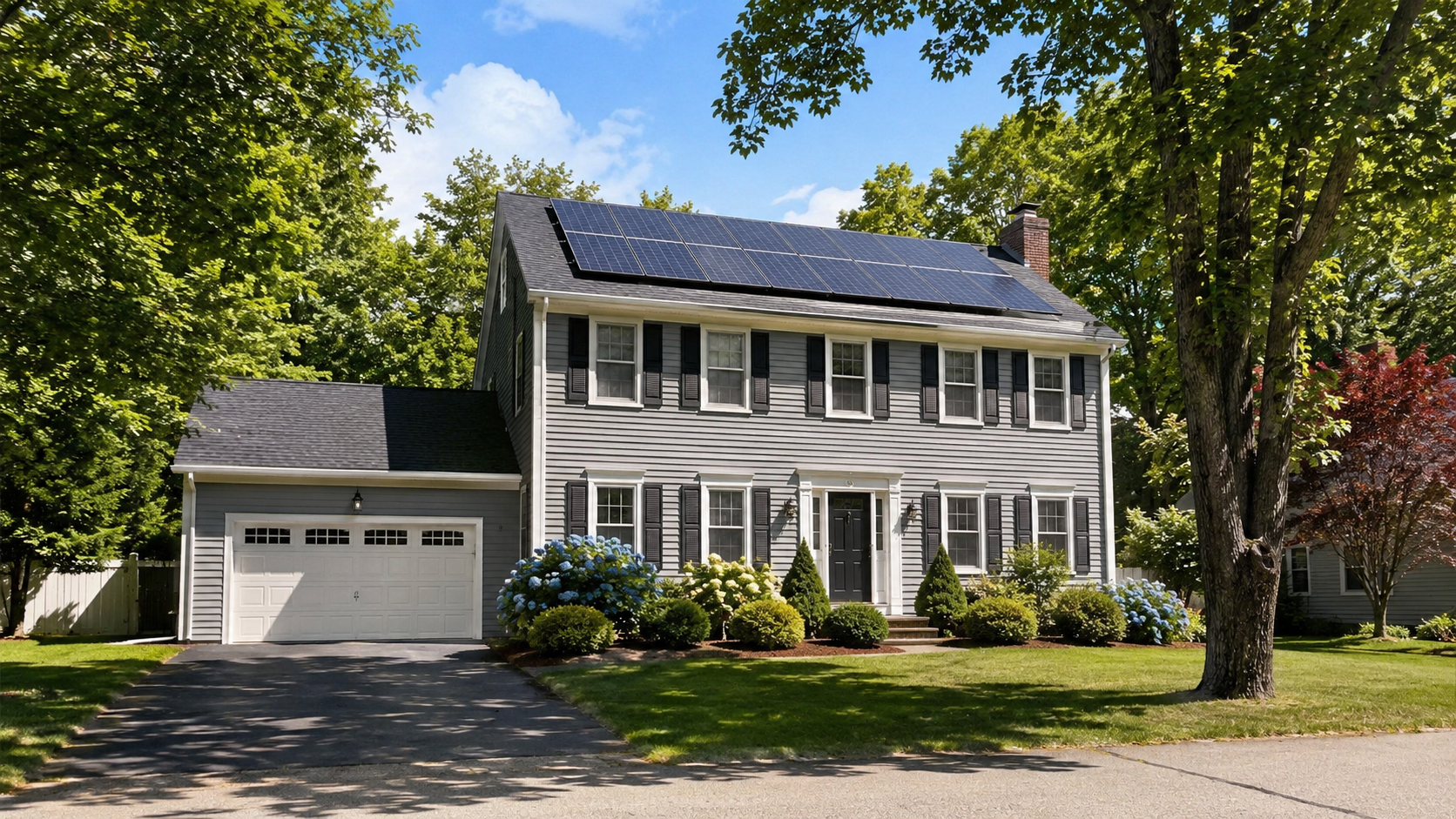
Solar panels can help Milford, MA homeowners reduce the amount of electricity they buy from the grid, but the value of solar depends on the individual home.
Electricity usage, roof exposure, shade, roof condition, system design, and long-term goals all affect whether a project makes sense.
A strong solar evaluation should begin with the home’s actual electric bill and roof, not a generic estimate.
Key takeaways
Milford homeowners should review a full year of electricity usage before comparing solar options.
Roof exposure, shade, available roof space, and roof condition have a major effect on solar production.
National Grid remains the electric delivery utility for Milford homes, even when the household participates in Milford Community Electricity.
Solar panels alone usually do not provide power during a grid outage. Battery storage is needed for most backup-power setups.
The best solar proposal should explain system size, expected production, utility billing, equipment, warranties, and long-term value clearly.
How do solar panels work on a Milford home?
Solar panels produce electricity from sunlight. That electricity is used by the home first, reducing the amount of electricity that needs to be purchased from the grid.
The system produces different amounts of electricity throughout the day and year.
Production is usually stronger during longer, sunnier days and lower during shorter winter days. The goal is not for every day to look the same. A solar system is designed around expected annual production and the home’s overall electricity usage.
When the system produces more electricity than the home is using at that moment, eligible systems may send excess electricity to the grid and receive utility bill credits through net metering.
What makes a Milford home a good fit for solar?
A Milford home may be a good fit for solar when it has usable roof space, strong sun exposure, limited shade, and enough electricity usage to create meaningful value.
South-facing roofs often receive strong sunlight, but south-facing exposure is not required.
East-facing and west-facing roof sections can also support productive solar systems. Roof pitch, mature trees, chimneys, dormers, neighboring buildings, and the amount of open roof space all affect the design.
Two homes on the same street can have very different solar potential.
That is why a home-specific review is more useful than a townwide estimate.
Why should homeowners review their electric bill before going solar?
The electric bill shows how much electricity the home uses and how that usage changes throughout the year. It also shows supply charges, delivery charges, the electricity supplier, and the rate structure currently affecting the home.
One month is not enough.
Summer air conditioning, pool equipment, heat pumps, electric vehicles, and seasonal household routines can create large swings in usage. Reviewing 12 months gives a clearer picture of the home’s actual energy needs.
Understanding a National Grid bill in Milford also helps homeowners recognize the difference between electricity supply, delivery charges, and total usage before comparing solar proposals.
How does National Grid fit into the solar process?
National Grid remains the electric delivery utility for Milford homes. A solar project must go through the utility interconnection process before the system can operate normally with the grid.
The solar company typically handles much of the application and coordination work, but homeowners should still understand the basic steps.
The process may include system design, utility application, local permitting, installation, inspection, meter-related work, and permission to operate.
Installation is not the final step.
The system should not be turned on for normal operation until the required approvals are complete.
Does Milford Community Electricity affect solar?
Milford Community Electricity affects the supply portion of the electric bill. It does not replace National Grid as the electric delivery utility and does not take over solar interconnection, grid maintenance, outage repairs, or billing.
The supply program and solar serve different purposes.
Milford Community Electricity provides electricity supply options.
Solar produces electricity at the home.
Understanding how Milford Community Electricity works can help homeowners see how electricity supply fits into the larger utility picture.
What solar programs may be available to Milford homeowners?
Milford homeowners may be able to benefit from current Massachusetts solar programs when their systems qualify. These can include net metering, SMART 3.0, and certain Massachusetts state tax benefits or exemptions.
A solar proposal should clearly identify which programs are included in the financial estimate, how eligibility is determined, and whether any projected benefit depends on approval or program availability.
Can solar panels lower a National Grid electric bill?
Yes, solar panels can lower a National Grid electric bill by reducing the amount of electricity the home needs to purchase from the grid. The amount of savings depends on electricity usage, solar production, system size, utility rates, and the structure of the bill.
Solar does not usually eliminate every utility charge.
Homeowners may still see fixed customer charges, remaining electricity usage, or other utility-related charges after installing solar.
A realistic proposal should explain what the homeowner may continue paying instead of promising that every electric charge will disappear.
Do solar panels work during Milford winters?
Yes, solar panels continue producing electricity during Milford winters because they use sunlight, not heat.
Winter production is usually lower because days are shorter and the sun is lower in the sky. Snow can temporarily reduce production when panels are covered, but systems are evaluated based on expected production across the full year.
Cold weather itself does not stop solar panels from working.
The more important factors are available sunlight, roof orientation, shade, and the annual system design.
Should homeowners replace an older roof before installing solar?
A roof that is approaching the end of its useful life should be evaluated before solar panels are installed. Replacing an aging roof first may prevent the added work and expense of removing and reinstalling panels later.
Solar panels are long-term equipment.
The roof underneath them should be prepared for that timeline.
A solar company should ask about roof age, visible wear, previous repairs, and any planned roofing work before finalizing the system design.
Should future electricity use be included in the solar design?
Yes, planned increases in electricity use should be discussed before the system is designed.
An electric vehicle, heat pump, pool, hot tub, electric water heater, home addition, or new appliance can change household electricity use.
The system should not be oversized based on guesses, but future energy plans should not be ignored either.
A thoughtful design looks at current usage and realistic changes that may happen after installation.
Do solar panels keep the lights on during a power outage?
Solar panels alone usually do not power a standard grid-connected home during an outage. Most systems automatically shut down when the grid goes down for safety.
Battery storage can provide backup power when the system is designed for that purpose.
The battery may support selected circuits, larger portions of the home, or a broader backup setup depending on battery capacity and electrical design.
Homeowners concerned about power outages in Milford, MA should discuss backup priorities early. Refrigeration, lighting, internet, sump pumps, medical equipment, and heating controls may all affect the battery design.
How should Milford homeowners compare solar proposals?
Compare the total project cost, system size, expected annual production, panel and inverter equipment, warranties, utility assumptions, financing terms, and projected long-term value.
Do not compare only the monthly payment.
A lower payment may come from a smaller system, a longer financing term, or different assumptions.
A larger production estimate is not automatically better either. Ask how the estimate was calculated and whether it reflects the actual roof, shade, and local conditions.
The proposal should make sense when traced back to the home’s electric usage and roof design.
How should homeowners choose a solar company in Milford?
Choose a company that reviews the electric bill, evaluates the roof, explains the utility process, uses realistic production assumptions, and answers questions without pressure.
The company should be able to explain why the recommended system size makes sense.
It should also be clear about equipment, warranties, project responsibilities, expected timelines, and what happens after installation.
The right questions to ask before hiring a solar company in Milford can help homeowners compare proposals based on substance rather than sales presentation.
Your World Solutions helps Milford homeowners evaluate solar using the actual electric bill, roof conditions, electricity usage, and long-term goals. Homeowners comparing the best solar company in Milford, MA should look for realistic numbers, clear communication, and a recommendation built around the home.
Frequently Asked Questions About Solar Panels in Milford, MA
How long does the solar installation process take in Milford?
The full solar process usually takes longer than the physical installation. Design, permitting, utility approval, inspection, and permission to operate all affect the timeline.
Can a shaded Milford home still use solar panels?
A partially shaded home may still support solar, but the effect depends on where the shade falls and how long it covers the roof. A detailed roof and shade analysis is needed to estimate production accurately.
Will solar panels damage my roof?
Properly installed solar panels should not damage a roof. Homeowners should ask about mounting methods, roof penetrations, workmanship coverage, and who is responsible for roof-related service.
Can I add more solar panels later?
Additional panels may be possible later, but roof space, utility requirements, equipment compatibility, system design, and current regulations can affect expansion options. Future electricity needs are worth discussing during the original design.
Do I need battery storage with solar panels?
No, battery storage is not required with solar panels. A battery is an optional addition for homeowners interested in backup power, stored energy, or greater control over household electricity use.