
Questions to Ask Before Hiring a Solar Company in Milford, MA
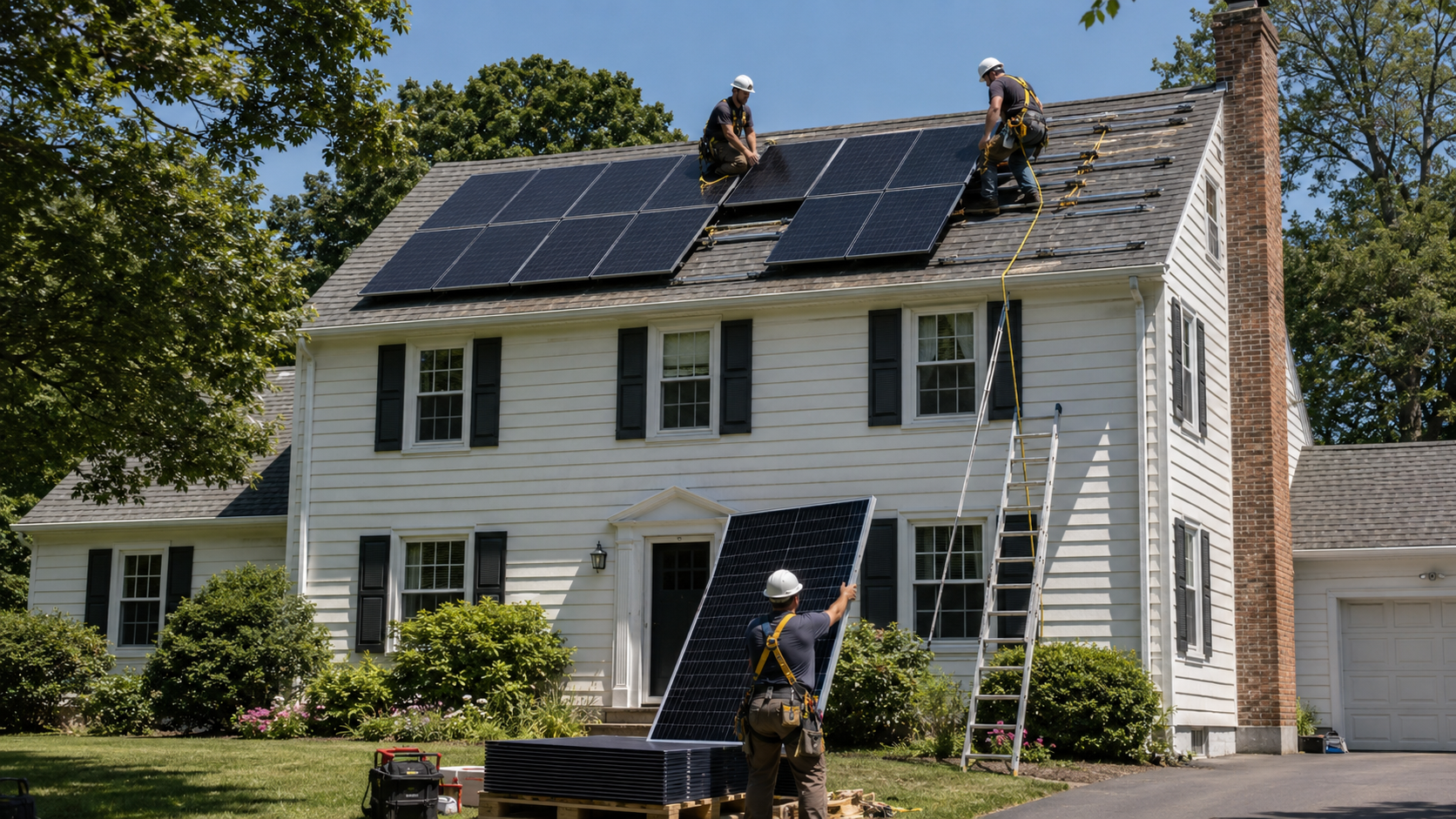
Before hiring a solar company in Milford, MA, ask how the system was sized, how projected savings were calculated, what equipment is included, which warranties apply, and how the company handles National Grid approvals. A strong solar company should explain the recommendation clearly, use your actual electric bill, and give you enough information to compare options without pressure.
Key takeaways
A solar proposal should be based on your actual electricity usage, roof, shade, and long-term goals.
The company should explain system size, estimated production, utility assumptions, equipment, warranties, and project responsibilities.
Do not compare solar proposals by monthly payment alone.
Ask who will handle permitting, National Grid interconnection, inspections, service, and communication after installation.
A trustworthy solar company should be willing to explain when solar is not a good fit.
Did you review my actual electric bill?
Yes, a solar company should review your actual electric bill before recommending a system. Your bill shows how much electricity your home uses, how usage changes throughout the year, and what supply and delivery charges currently affect the account.
One month is not enough.
A full year of usage gives a better picture because air conditioning, pool equipment, heat pumps, electric vehicles, and seasonal routines can cause large changes from month to month.
A homeowner who understands their National Grid bill in Milford is also in a stronger position to compare solar proposals and question assumptions that do not match the home’s actual usage.
How did you choose the recommended system size?
The solar company should explain how the proposed system size was chosen based on annual electricity usage, available roof space, shade, roof orientation, equipment, and future energy plans. The recommendation should be specific to the home.
Bigger is not automatically better.
A larger system may produce more electricity, but it still needs to fit the roof, utility requirements, and household needs. A smaller system may cost less, but it may also offset less electricity.
The company should be able to show how the proposed system connects to the home’s actual usage and why that size makes sense.
What annual production estimate are you using?
The company should provide an estimated annual production number and explain how it was calculated. The estimate should reflect roof direction, pitch, shade, panel placement, local weather patterns, and the equipment being proposed.
This is one of the most important numbers in the entire proposal.
Projected savings often depend heavily on projected production. If the production estimate is overly optimistic, the savings estimate may look better on paper than it will in practice.
Ask the company to explain what assumptions were used and whether the estimate accounts for trees, roof obstructions, seasonal changes, and system losses.
How were the projected savings calculated?
Projected savings should be based on actual electricity usage, current utility rates, expected solar production, system cost, and clearly identified assumptions. The company should be able to explain the calculation without relying on vague promises.
Ask which electric rate was used.
Ask whether future utility increases were included.
Ask which incentives or utility programs were assumed.
Ask what electric charges may remain after solar.
The numbers should be easy to trace. If a proposal shows large long-term savings but no clear explanation of how they were calculated, slow down and ask for more detail.
How will National Grid billing work after solar?
The company should explain how National Grid billing may change after solar, including remaining utility charges, solar production, net metering credits, and the continued connection to the electric grid. Most Milford homeowners will still receive a National Grid bill after installation.
Solar can reduce how much electricity the home buys from the grid, but it does not usually remove every charge.
Fixed customer charges, electricity used beyond solar production, and other utility-related charges may still appear.
A company working in Milford should also understand how Milford Community Electricity affects the supply side of the electric bill without replacing National Grid as the delivery utility.
Who handles the National Grid interconnection process?
The solar company should explain who prepares and submits the utility application, responds to utility questions, coordinates required documentation, and tracks the project through permission to operate. Homeowners should know who is responsible for communication during each step.
The utility process is separate from the physical installation.
A project may still require design approval, permitting, inspection, utility review, meter-related work, and final authorization after the panels are installed.
Ask who will keep you updated and what happens if National Grid requests changes or additional information.
What happens between signing the agreement and turning the system on?
The company should explain the full project timeline, including final design, site review, permitting, utility applications, installation, inspection, and permission to operate. Signing the agreement is only the beginning of the process.
The physical installation may take a short amount of time.
The full project usually takes longer because several approvals happen before and after installation.
Ask who manages each step, what information you may need to provide, and how often the company will communicate with you.
What equipment is included in the proposal?
The proposal should identify the solar panels, inverter equipment, mounting system, monitoring platform, and any battery equipment included. Homeowners should know exactly what is being installed.
Do not focus only on the panel brand.
The inverter, system design, equipment compatibility, warranties, service process, and installation quality also matter.
Ask why the company selected that equipment and whether there are meaningful differences between the proposed option and available alternatives.
What warranties are included?
The company should explain the panel warranty, production or performance warranty, inverter warranty, workmanship coverage, roof penetration coverage, and any battery warranty. Homeowners should also understand who handles service if a problem occurs.
A warranty is only useful if you know how it works.
Ask how long each warranty lasts.
Ask what is covered.
Ask what is excluded.
Ask who you contact if equipment needs service five or ten years from now.
The answers should be clear before you sign.
Who installs the solar panels?
Ask who will physically install the system and who is responsible for the installation quality. Some solar companies use their own crews, while others work with installation partners.
Neither model is automatically better.
What matters is accountability.
Ask who pulls permits, who supervises the installation, who handles inspections, and who is responsible if a workmanship issue appears later.
Your agreement should make those responsibilities clear.
What happens if my roof needs work?
The company should review the roof’s age and condition before finalizing the project. If the roof is approaching the end of its useful life, replacing it before installing solar may be the better long-term decision.
Solar panels are designed to remain on the roof for many years.
Installing them over a roof that needs replacement soon can create additional work and expense later.
Ask what happens if roof damage is discovered during the site review and whether roof removal and panel reinstallation are covered under any future service agreement.
Should I ask about battery backup?
Yes, ask about battery backup if power outages are an important concern. Solar panels alone usually do not keep a standard grid-connected home powered when the utility grid goes down.
Battery storage can provide backup power when the system is designed for that purpose.
The right battery setup depends on what you want to keep running. Refrigeration, lighting, internet, sump pumps, heating controls, medical equipment, and larger appliances can require very different amounts of energy.
Homeowners concerned about power outages in Milford, MA should bring up backup priorities before the solar system is finalized.
Can I add a battery later?
A battery may be added later in many situations, but compatibility depends on the original solar equipment, electrical setup, available space, and future technology. Discussing possible battery plans during the initial design can make later expansion easier.
Ask whether the proposed inverter and electrical design will support future storage.
Also ask whether adding a battery later may require additional electrical work, permitting, or equipment changes.
Planning ahead does not mean you have to buy a battery now. It simply keeps future options in view.
What financing or ownership options are available?
The company should explain the total project cost, payment structure, ownership terms, financing details, and long-term obligations. Homeowners should understand the full cost, not just the monthly payment.
A low monthly payment does not automatically mean a better deal.
Compare the total amount paid, financing term, interest or dealer-related costs, early payoff rules, equipment ownership, and expected long-term value.
The proposal should make it easy to understand what you are paying and what you will own.
Are the incentives and savings assumptions current?
The company should clearly identify which Massachusetts programs, utility policies, tax benefits, or exemptions are included in the proposal. The assumptions should reflect current 2026 rules rather than outdated solar information.
Older articles and calculators may still show programs that are no longer active.
Ask which benefits are included.
Ask whether eligibility is guaranteed.
Ask whether the proposal changes if a program, rate, or approval is different from the original estimate.
Current information matters because incentives can have a meaningful effect on the numbers.
What happens if the system produces less electricity than expected?
The company should explain whether the production estimate is guaranteed, what monitoring is included, and how underperformance is handled. Homeowners should understand the difference between an estimate, a warranty, and a formal production guarantee.
Ask how system performance will be monitored.
Ask who reviews performance concerns.
Ask what happens if a panel, inverter, or monitoring system stops working.
A clear service process matters just as much as the original sales presentation.
How often will I receive project updates?
The company should explain how often it communicates during design, permitting, utility review, installation, inspection, and activation. Homeowners should know who their main contact will be.
Silence creates frustration.
Even when a project is waiting on a permit or utility approval, a simple update helps homeowners understand what is happening.
Ask whether communication happens by phone, email, text, an online portal, or a combination of methods.
What are the biggest solar sales red flags?
The biggest red flags include pressure to sign immediately, promises that the electric bill will disappear, vague savings calculations, no bill review, no roof discussion, unclear equipment, and unanswered questions about warranties or service.
Be cautious when the urgency feels manufactured.
A strong opportunity should still make sense after you have time to review the information.
The company should be comfortable explaining the downside, correcting assumptions, and telling you when solar may not be the right fit.
How should I compare solar companies in Milford?
Compare solar companies based on system design, projected production, total cost, equipment, warranties, utility knowledge, communication, service responsibilities, and the quality of the explanation.
Do not compare only monthly payments.
Do not assume the largest production estimate is automatically the most accurate.
Do not assume the lowest price automatically provides the best long-term value.
A thoughtful review of the best solar company in Milford, MA should focus on transparency, local knowledge, realistic numbers, and whether the recommendation fits the home.
Your World Solutions helps Milford homeowners evaluate solar using the actual electric bill, roof conditions, electricity usage, and long-term goals. The goal is to help homeowners understand whether solar makes sense before making a commitment.
Frequently Asked Questions
Should I get more than one solar proposal?
Yes, comparing more than one solar proposal can help you understand differences in pricing, system size, equipment, production estimates, warranties, and service. Compare the assumptions behind each proposal rather than looking only at the monthly payment.
How long should I take to review a solar agreement?
Take enough time to understand the system design, cost, financing terms, equipment, warranties, utility assumptions, and cancellation terms. A reputable company should give you room to ask questions before signing.
Should my solar company explain when solar is not a good fit?
Yes, a trustworthy solar company should be willing to explain when solar is not a good fit. Heavy shade, limited roof space, poor roof condition, low electricity usage, or other property factors can make a project less attractive.
Do I need to understand every technical detail before signing?
No, you do not need to become a solar engineer before signing. You should understand the major numbers, responsibilities, equipment, warranties, costs, expected production, utility process, and what happens if something goes wrong.
Can I choose a solar company before deciding whether I want a battery?
Yes, you can choose a solar company before making a final battery decision. Mention possible backup needs early so the solar and electrical design can account for future battery options.